

| Estimated Expenses (2002 Values) |
Molds - $8.00 eachPlastic - $35.00 per gallon(can be purchased in pint and quart sizes) Softener/Hardener - $8.00 per pint Colors - $3.00 per bottle(most anglers purchase more colors than they reed) Glitter - $3.50 per bottle Worm Oils - $3.00 per bottle Warming Pots - $8.00 each (Can get electric warming pots that are very helpful when pouring for about $60 each.) There are also beginner kits available for about $25.00 Cost of plastic worms in the store: 10 pack = $.3.50 10 Hand Poured at home (after initial investment) = .60 The initial investment returned after approximately 530 worms. One gallon of plastic can make approximately 768 six-inch worms. |
| Where to find supplies |
Barlow's: (972) 231-5982 Sells many bait-making components. Prescription Plastics: Based out of Kansas (913) 727-1225. Jann's Netcraft: In Ohio (419)868-8288 sells a full line of materials. M-F Manufacturing: Retail/bulk pricing on materials, still sells resin molds, and stocks RTV mold-making compound. Call (817) 281-9488 |
Let me start off by saying there are a lot of people with aspirations of making a lot of money hand-pouring plastic worms, but unless you have a tremendous amount of capital behind you, it's unrealistic to think you can get rich pouring worms. The cost of marketing, staffing, purchasing raw product, distribution, and more puts success out of reach for the average starting entrepreneur. On the other hand, there can be a lot of fun and creativity in your leisure time, pouring worms, and you may even hit on a color combination or style that will put you ahead of others at your next tournament.
To begin with, you need to purchase some plastic, molds, colors, glitter, and a warming pot or two. The process is really quite simple, and you're only limited by your imagination. As you learn more, you may even start creating your own molds.
I would suggest purchasing a gallon of plastic. For the average angler, this should be enough plastic to keep you in worms for a long time, unless your friends snatch them out of your tackle box. You can purchase the plastic for around $35. For about the same price, you can also purchase hardeners or softeners and experiment to see how stiff or soft you want your lures to be. But, instead of buying a gallon, purchase a quart or pint of each. They go a long way, and you don't need as much.
You will also need a pouring or warming pan. These can be purchased for around $8 each.
Home pourers can purchase various molds from straight tail worms to crawdads for around $8 to $10 for a typical two-lure mold. Colors can be purchased by the bottle, and there are many colors to choose from. One company has nearly 50 colors, and you can invent thousands of new ones by mixing colors. The possibilities are limitless. There are glitters you can purchase for approximately $3.50 per color. Again, mixing colors can be great fun.
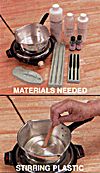
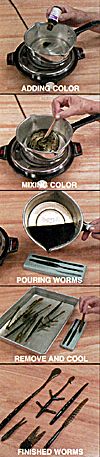
To begin, get your plastic, colors, molds, a spoon, and your pouring pan ready. If you're heating the plastic on a stove (gas or electric), shake the plastic well and pour it into the pan. Be careful, you'll be surprised to know that an ounce of plastic will make approximately six average-sized worms. Fill the pan too much, and pouring evenly will be more difficult. Heat the plastic slowly until the liquid thickens and becomes clear (this will happen at approximately 350 degrees Fahrenheit). Try to avoid overheating and scorching the plastic. At this point, you can vary the toughness of the plastic with hardener or softener.
Now comes the color. It doesn't take much; one ounce is sufficient to color up to a gallon of plastic. Shake the color well, add it to the plastic, and stir it well. Once you have achieved your desired color, you can add the glitter of your desires. Again, don't go wild, like the old Brylcream commercials used to say, 'a little dab'll do ya.' Fluorescent colors are best added when the plastic is cool.
Image
Image
|
Evenly pour the plastic into the molds. Fill the cavity of the mold until it almost crowns over. If you make two-color worms, have both pots ready and pour the second color as soon as possible to ensure a good bond to the first color.
Allow the worms to cool for three minutes, gently remove them from the mold, and place them in a shallow pan of water to finish cooling the plastic. When the worms are cooled, remove them from the water and allow them to dry.
To help keep the worms from clinging to each other, apply some worm oil into the bag. Worm oil can be purchased in various scents and flavors. Just a few drops of worm oil will do the job.
Once you have mastered mixing colors, getting the toughness to your liking, and making clean pours, you can move on to the next step, creating your own molds.
One way to begin making your molds is to find various styles of worms, crawdads, or creature baits and piece them together to create something totally different. You can use a product called Worm-Weld and put the pieces together in the fashion you desire, and then, using plaster of Paris, you can make a shape of the new creation. Fiberglass resin is a better choice for durability, but it is also more expensive.
You can also carve and shape new shapes out of clay, wood, or various materials to create an entirely new bait unseen in today's fishing world. Just remember that they must be thick enough to pull out the mold without tearing.
Another significant aspect of pouring your worms is that it provides a way to recycle worn and ripped worms. Don't toss them; put them away. Then, you can melt them down and reshape them into worms you can use repeatedly.
Always make sure you are in a well-ventilated room when you are melting and pouring the plastic.
While it's highly doubtful you will get rich pouring worms, you can save yourself some money in the long run, you can get highly creative, designing colors that others don't have in their tackle boxes, and you may even create a lure that will become your fish-catching secret. Of course, if you make one that is that good, don't be surprised if you find your closest fishing friends marauding your tackle boxes when your back is turned.
Reprinted with permission from Bass West Magazine