

I am often approached at boat and tackle shows or fishing seminars by both adults and young people wanting to know how to get started in fishing. Where can you go to get the basic information on how to fish, not just the equipment and tackle needed, but also how to get started from scratch? What kind of fish to fish for, what do they look like, how do you rig the bait or lures, how do you tie a knot, what kind of rod and reel?
To most of us in the fishing world, these are things we learned growing up. However, many adults have missed the outdoors, and now they don't know where to take their children to experience the things they missed in the outdoor world. I will try to cover some of the basics in this article, but I can't do it all by myself; I need your help! It's up to those of us who do know to teach those who do not about fishing.
There are many different kinds of fish to fish for. Catfish and carp are plentiful and primarily prefer prepared or live bait. Crappie are fun, and it's easy to learn to catch them, too.
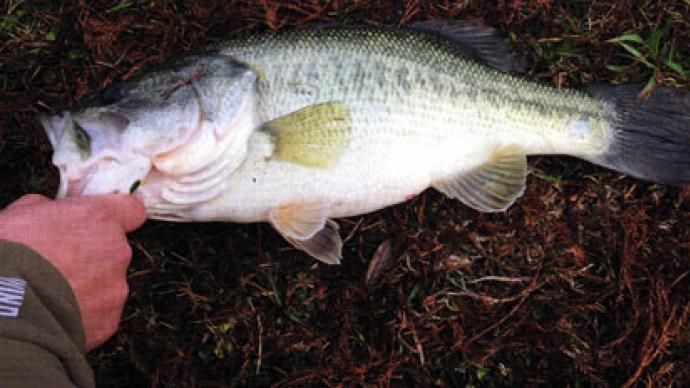
Now we will talk about the fish I like to pursue, bass. Bass are part of the perch family, also (bream and perch), just on the larger side. We will start with the striped bass, hybrids, and sand bass. Hybrids are a cross between a striper and a sand bass and typically do not spawn, although there have been some documented cases. Stripers and hybrids prefer live shad, perch, and, at times, cut-up shad. Stripers are typically found in river lakes. Sand bass like minnows, but are fun to catch on artificial lures like small jigs, spoons, and lipless crankbait-type lures. When they are surfacing (chasing shad), they can wear you out.
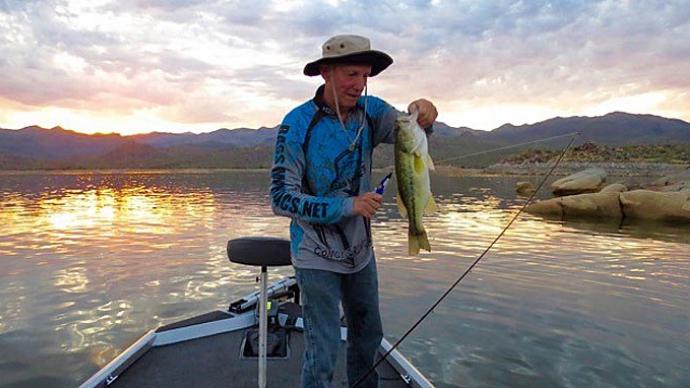
Smallmouth and spotted bass are typically found in deep, clear-water lakes and some rivers. They are tough to catch, picky eaters, and typically stay in deeper water. Black bass (my favorites), on the other hand, are probably the most pursued freshwater fish in the south. Although they will hit live shad and shiners, most anglers use artificial baits. There are hundreds of bass tournaments around the USA every weekend, and we still haven't figured out how to outsmart the black bass. It's what we all encounter that makes black bass such a challenge.
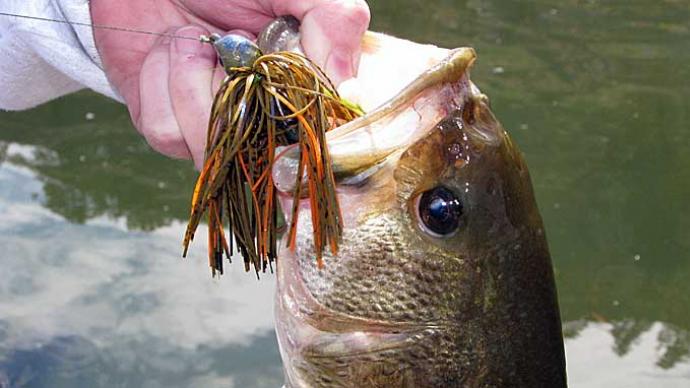
Black bass can be found in shallow to deep water at all times of the year. Spinnerbaits, lipless crankbaits, diving crankbaits, Texas- and Carolina-rigged worms, grubs, and centipede-type baits all work well, some better at different times of the year than others. Colors can vary as well, but the best rule of thumb is to use dark colors on dark days and light colors on bright days, and stick to the colors that most closely resemble the food source of the fish.
The best place to get a first-hand look at all of these fish is to visit the Freshwater Fishing Center south of Athens Lake outside of Athens, Texas. You can see the fish in their natural habitat and also get information about each species.
Let's take a look at the fishing equipment and tackle that you might need to get started. If you are just starting out and don't know or aren't going to concentrate on a particular fish group, I would recommend getting a Zebco Bullet MG Spincast Combo. Spool it with 10-pound line, and it will be suitable for most of the fish mentioned. The other basic tackle that I think you need includes the following. Some size #6 or #8 live bait hooks, a couple of crappie jigs, a few 1/4- and 3/8-ounce bell weights, and a small cork or float. This will cover any live bait fishing you may do and should be relatively inexpensive.
That said, I recommend using artificial baits. They are less trouble and not as messy. To get started with artificial baits, you will need a package of 1/0 offset worm hooks, some 3/16-ounce bullet worm weights, and one package each of 4-inch Roboworm Aaron's Magic and green pumpkin purple, for Texas-rigged worm fishing. One or two, 1/4-ounce shad pattern spinnerbaits and a couple of 1/4-ounce chrome/blue back lipless crankbaits. For crappie, perch, and sand bass, a few small white and chartreuse jig heads with the same color 2" grubs. This should cost you less than $50.00 and give you the basic tackle to entice a variety of species.
As your knowledge and skills improve, so will your choice of tackle change to adapt to the ability that comes with experience. If you're helping to get a new angler started, keep it simple at first and make it fun.
This should get you started with some basics. The best advice I can offer for now is to read as many articles on BassResource as possible and watch the fishing shows on YouTube and TV. Read books and gain as much knowledge as you can about fish and fishing; you can never learn enough. This would be easier if I were in front of you, explaining the art of fishing and doing some show and tell, but for now, this is my canvas. I hope I have painted you a good picture.
Bonita is sponsored by Cobra Boats, Mercury Motors, Bowie Marine, Hamby's Protectors, Solargizer, Falcon Rods, Bob's Machine Shop, Minn Kota, and Tournament Chasers.